Professor Pip's Science Discovery Collection
A collection of children's stories where Professor Pip learns and teaches kids about science.
Professor Pip's Electric Adventures: A Static Electricity Story

Professor Pip explains Professor static electricity. He is demonstrating static electricity with balloons and hair to a room full of curious children.
Professor Pip and Astro's Cosmic Adventure: Discovering Distant Worlds
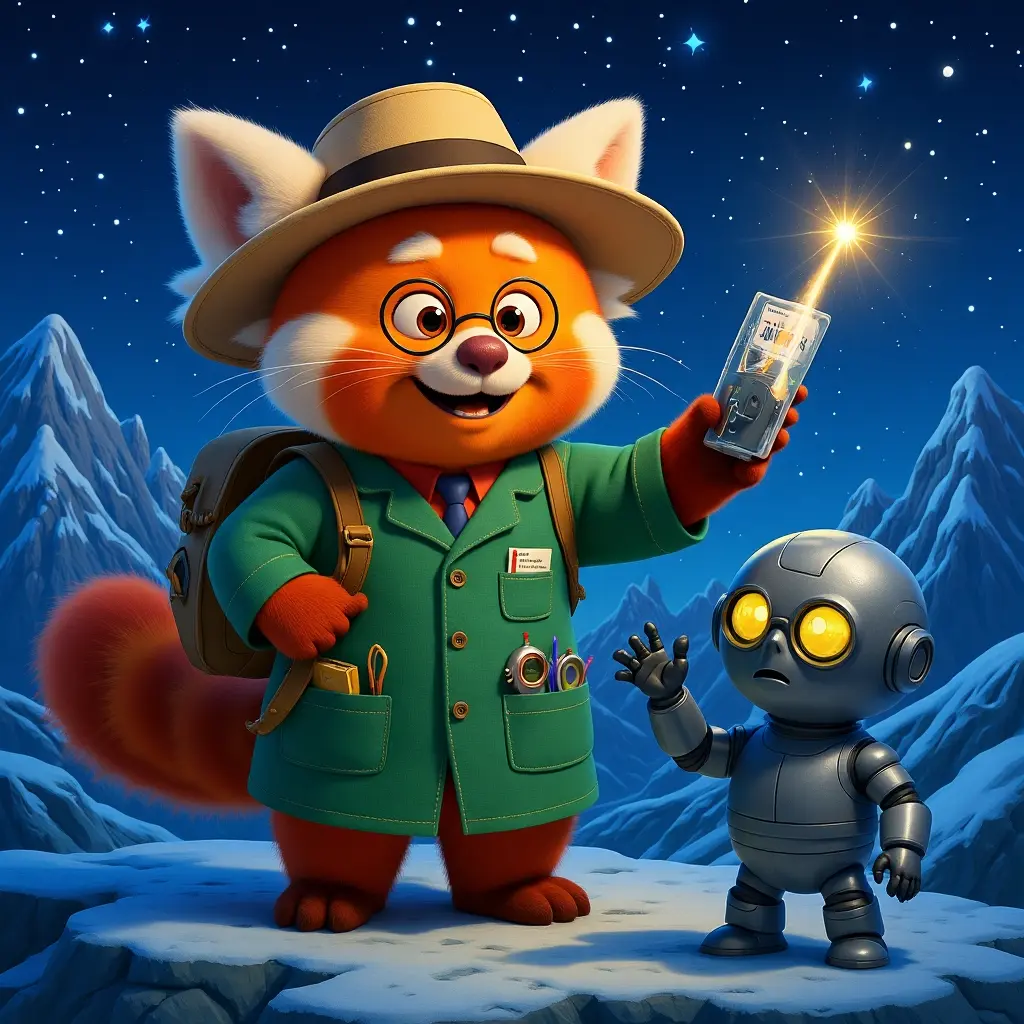
Professor Pip and his trusty space robot companion, Astro, are tasked with investigating a series of distant stars. They realize that simply seeing a star isn't enough; they need to find the planets orbiting them! Using advanced 'cosmic filters,' Professor Pip teaches the children how scientists use the transit method—watching for a slight dip in starlight when a planet passes in front of its star—to map out and characterize newly discovered, potentially life-supporting worlds.
Professor Pip Introduces Tylosaurus rex
A new sea king from the dinosaur age

Professor Pip adjusted his slightly crooked spectacles and patted the bulging pockets of his green lab coat. The waves whispered against the sandy shore as he reached in and pulled out a long, curved fossil tooth, almost as long as his a...
Professor Pip Goes to Japan
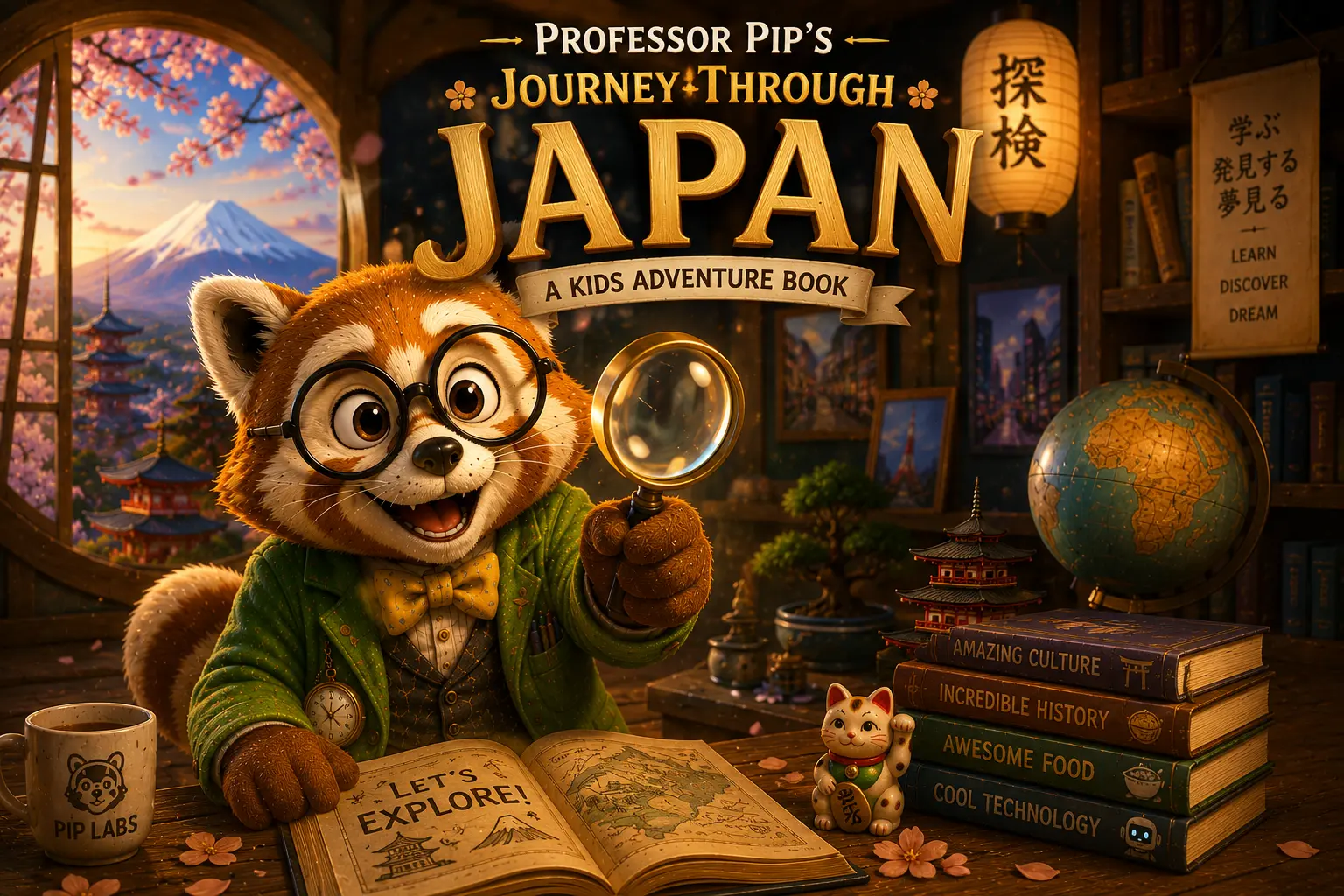
Professor Pip adjusted his crooked spectacles and pulled a folded map from one of his bulging green lab-coat pockets. "Today's adventure," he announced, his fluffy ringed tail swishing excitedly, "takes us to one of the most fascinati...
Professor Pip and Zippy's DNA Adventure: The Mystery of the Wilting Plant
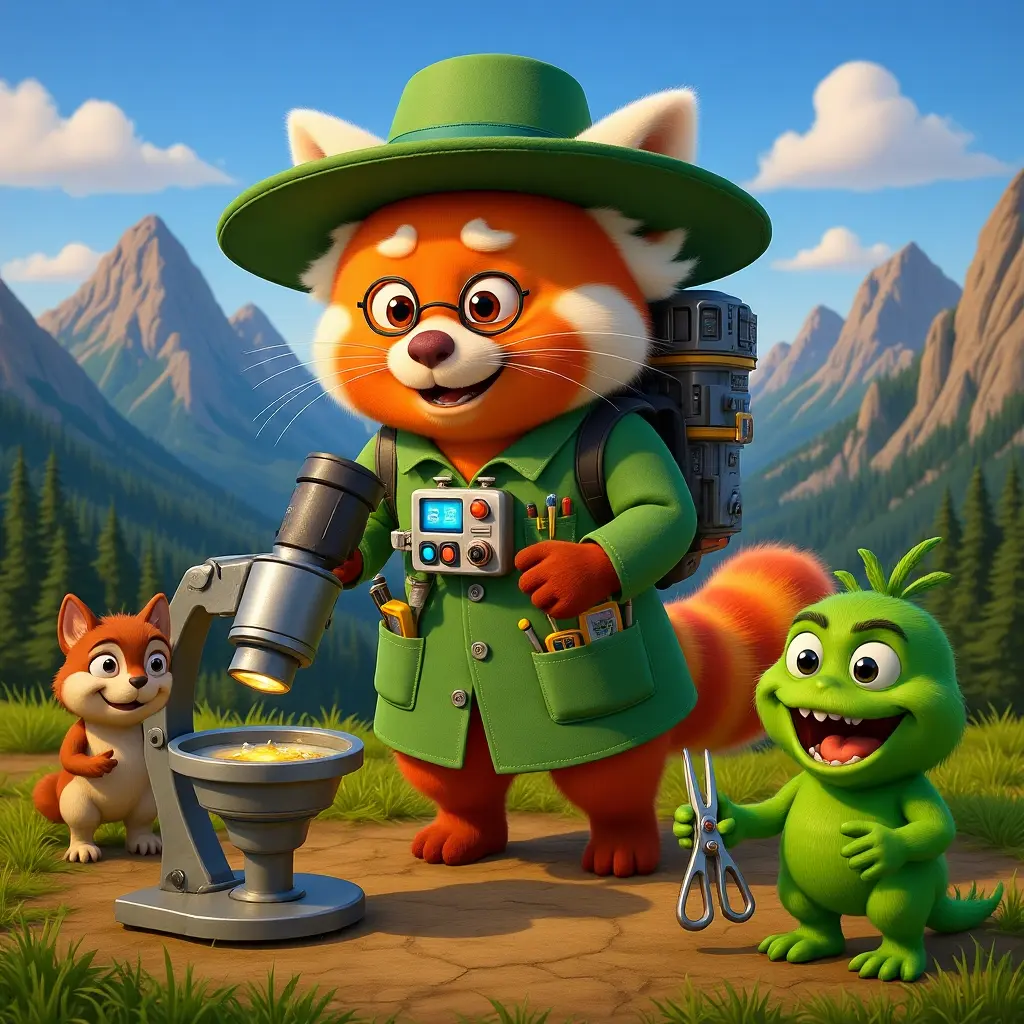
Professor Pip's laboratory falls into chaos when a magical, unseen 'Genetic Glitch' begins making common animals (like ladybugs or squirrels) unwell because their instruction manuals (DNA) have tiny mistakes! With the help of his student companion, Zippy the microscope monster, and using miniature, molecular scissors (representing CRISPR), Professor Pip must guide them to find the exact faulty gene sequence and 'snip it out' while simultaneously pasting in the correct healthy code. They save the day by fixing a sample plant that is struggling to bloom.
Professor Pip's Mammoth Miracle: An Arctic Adventure
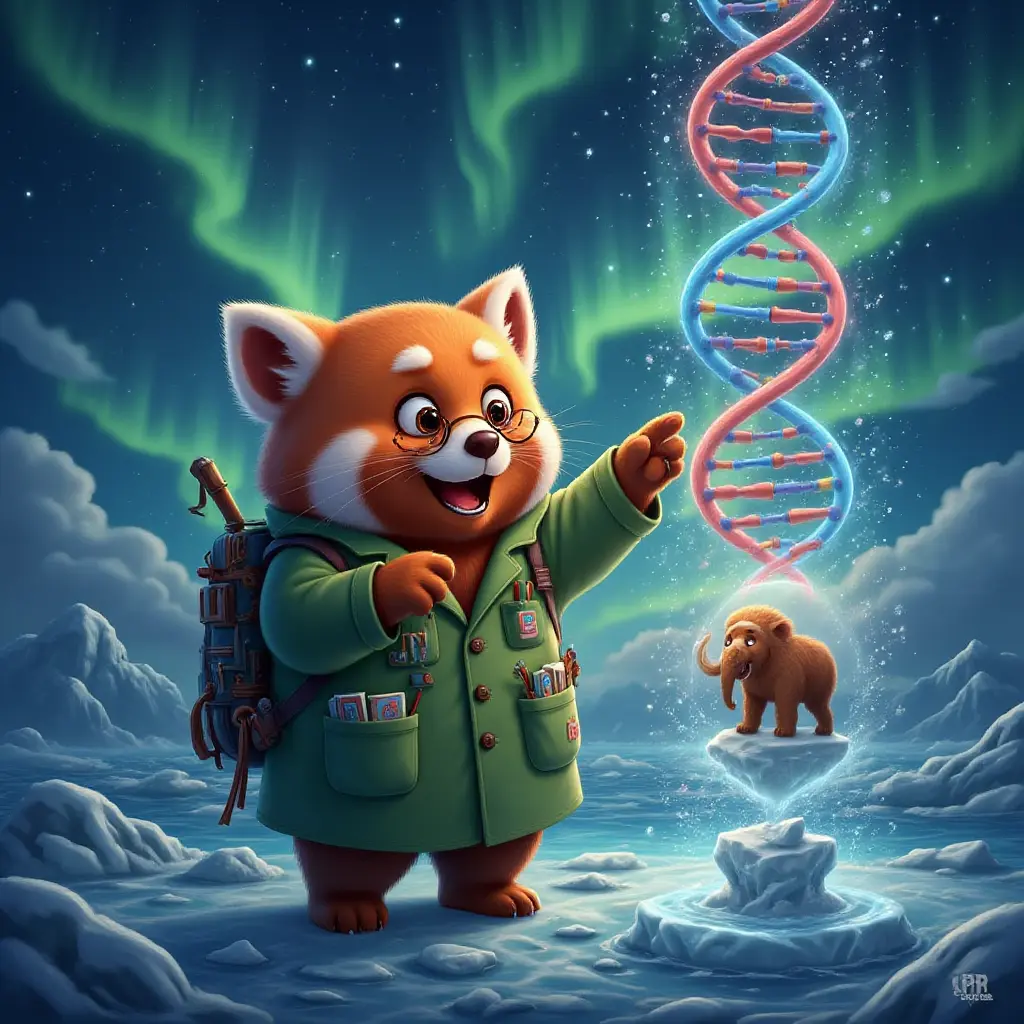
Professor Pip explains how to bring back extinct animals via cloning and trying to restore wolly mammoths to the arctic tundra.
Professor Pip and Beavers in London
Saving a London Train Station From Flooding

Professor Pip knelt on the riverbank in the golden afternoon light, patting his bulging green lab-coat pockets. "Hmmm, where did I put it… ah!" He pulled out a small wooden tray, a handful of little twigs, and a paper cup full of water. ...
Professor Pip and Maya's Galactic Quest
The Search for Earth's Second Home

Professor Pip and his young assistant, Maya, are on a mission to find Earth's second home among the stars! They use Professor Pip’s specially built 'Astro-Scanner' (modeled after JWST) to observe a distant planet. The planet seems dull until they realize that the star's light passing through its atmosphere is leaving colorful fingerprints—these are the 'biosignatures.' Pip teaches Maya how to read these spectral clues, realizing one fingerprint suggests water vapor and another suggests something living might be breathing out oxygen!
Professor Pip and the Dinosaur Discovery

Professor Pip carefully brushing dust off a large, exposed dinosaur bone (like a femur or skull) at a sunny, sandy dig site, using a tiny brush and wearing a wide-brimmed safari hat over his lab coat.
Professor Pip and the Magnetic Mystery
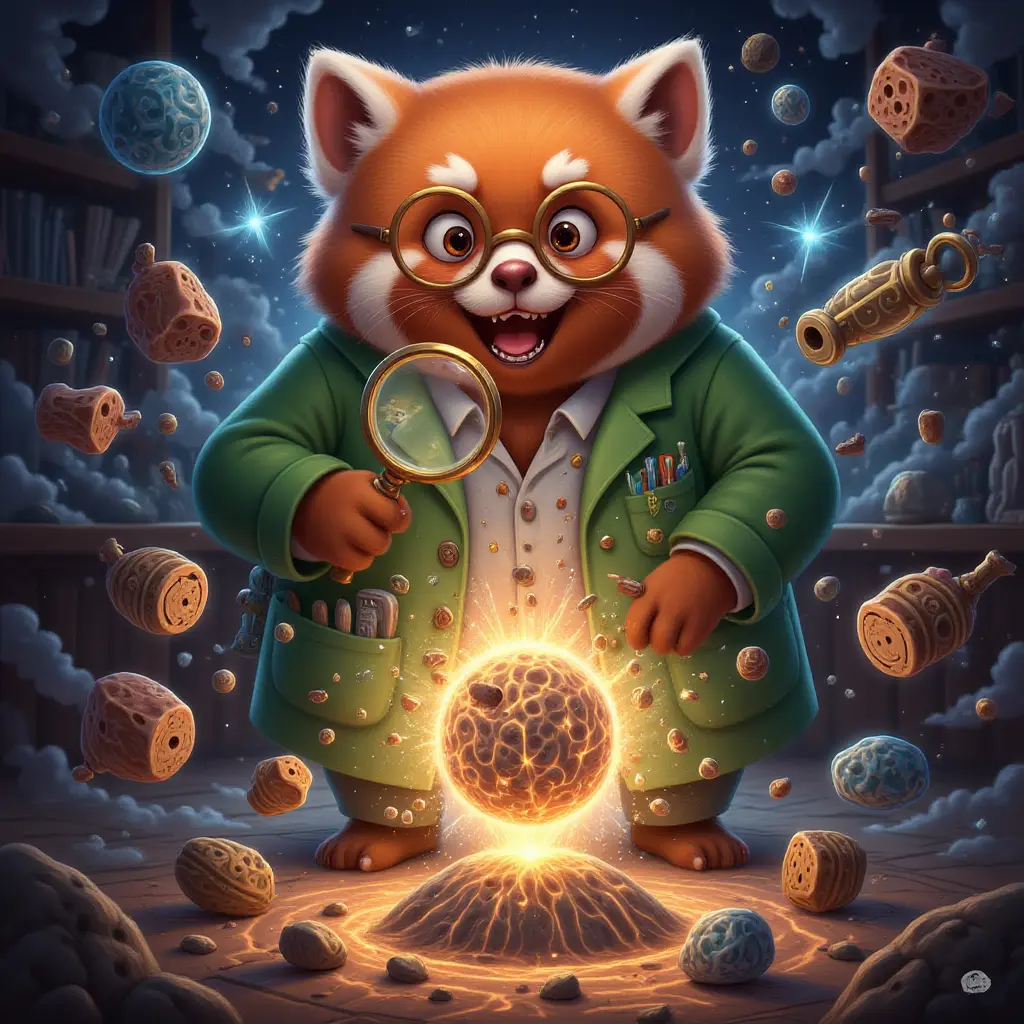
What makes magnets stick to some things and not others? Professor Pip explores the invisible forces of magnetism, showing how a simple stone can have a powerful, invisible pull.
Professor Pip's Heart Adventure: A Journey Through the Human Heart

Professor Pip standing knee-deep inside a giant, brightly colored, translucent model of a human heart, pointing at the flow lines of red and blue "blood" with a tiny pointer.
Professor Pip's Deep Sea Adventure: Discovering the Ocean's Wonders

Professor Pip peering out the circular window of a whimsical, mini-submarine, observing colorful coral and friendly deep-sea creatures.
Professor Pip's Division Adventure: A Forest Friends Math Journey
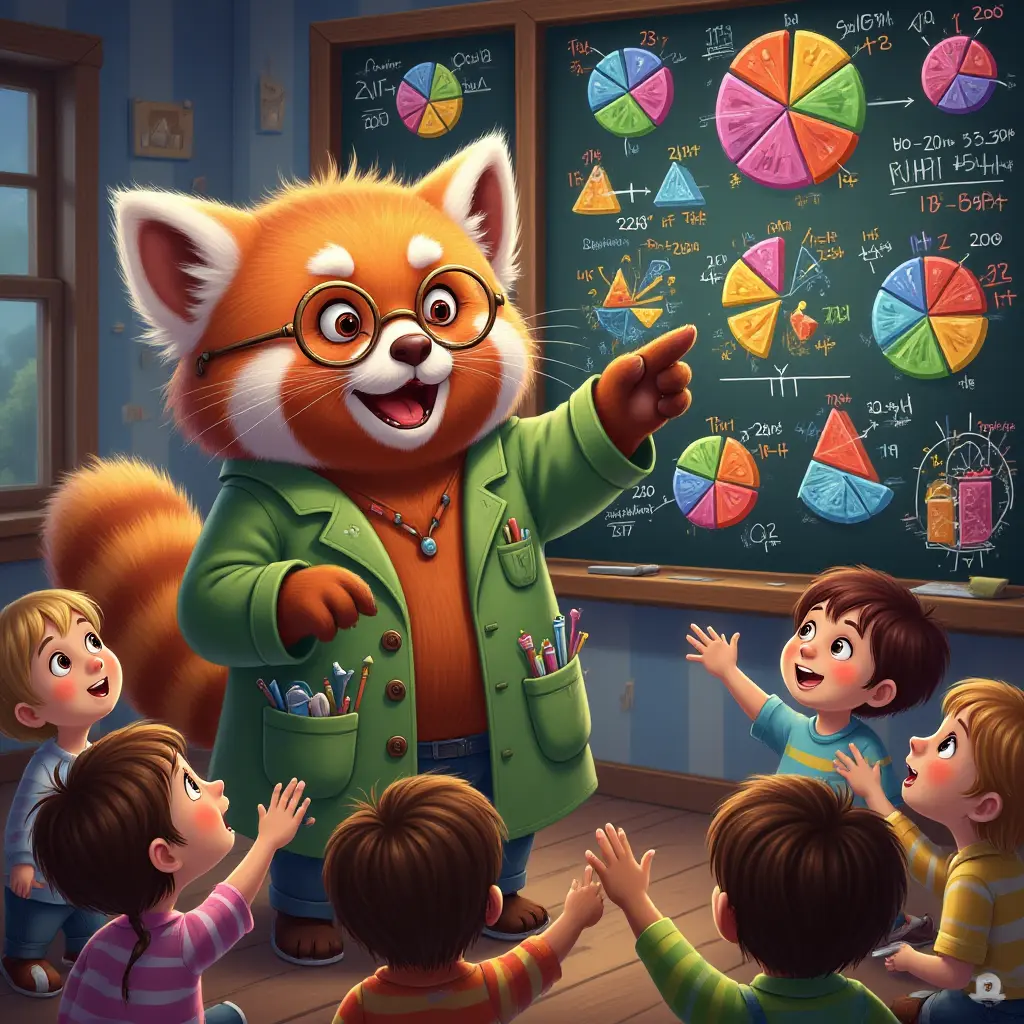
Professor Pip explains math explaining division and some tricks to help kids do division in their head, get faster at thinkiing about division, and how to work through problems on paper.
Professor Pip's Amazing Erosion Adventure
How Rivers Shape the Earth
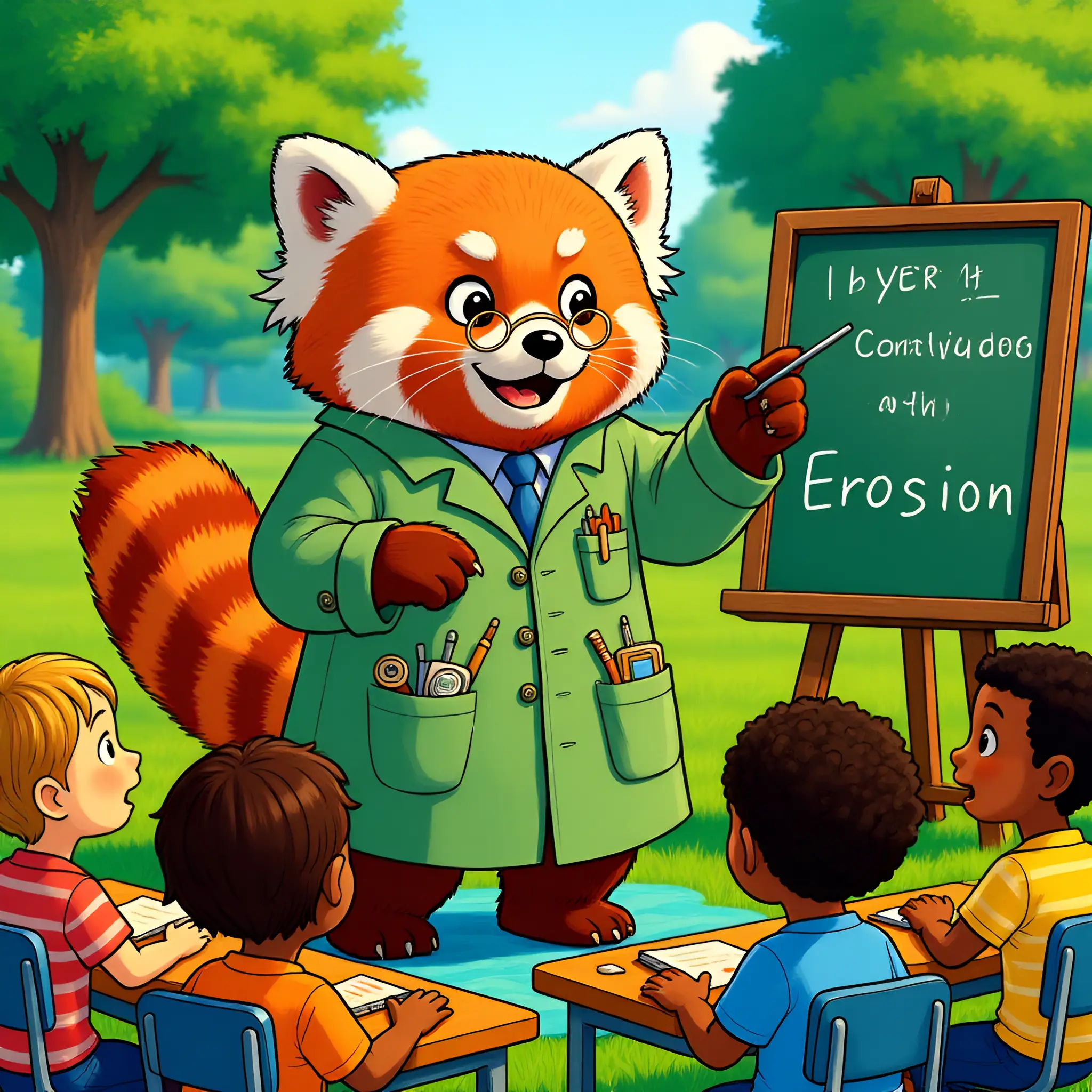
This children's book text features engaging stories and colorful illustrations designed to teach and entertain young readers, fostering their imagination, learning, and love for reading.
Professor Pip's Cosmic Journey: A Magical Tour of the Solar System
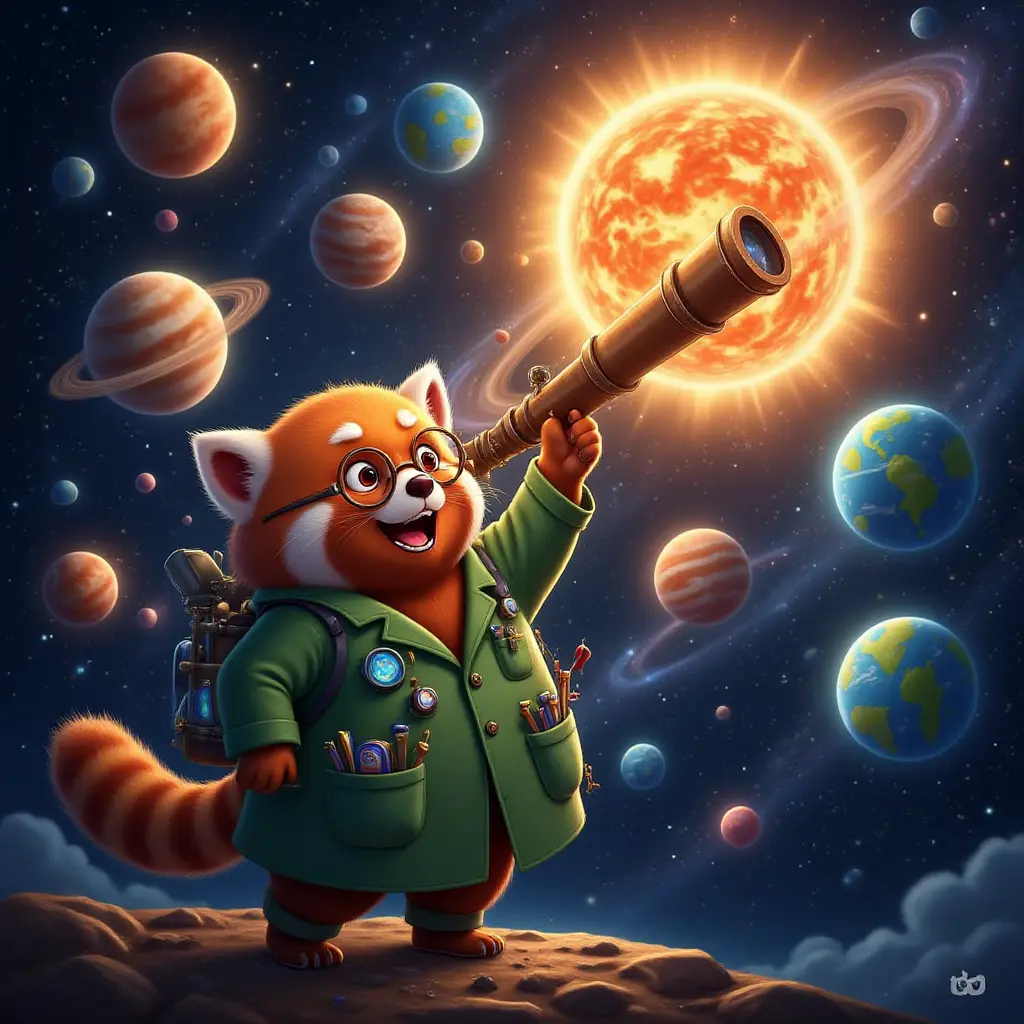
Professor Pip explains about the planets in our solar system, their unique features, and how they orbit the sun. With one page dedicated to detailing each planet, and others discussing the sun and the system as a whole, children will embark on an exciting journey through space, learning fun facts about each celestial body.
Professor Pip's Starry Adventure: A Red Panda's Journey Through the Cosmos
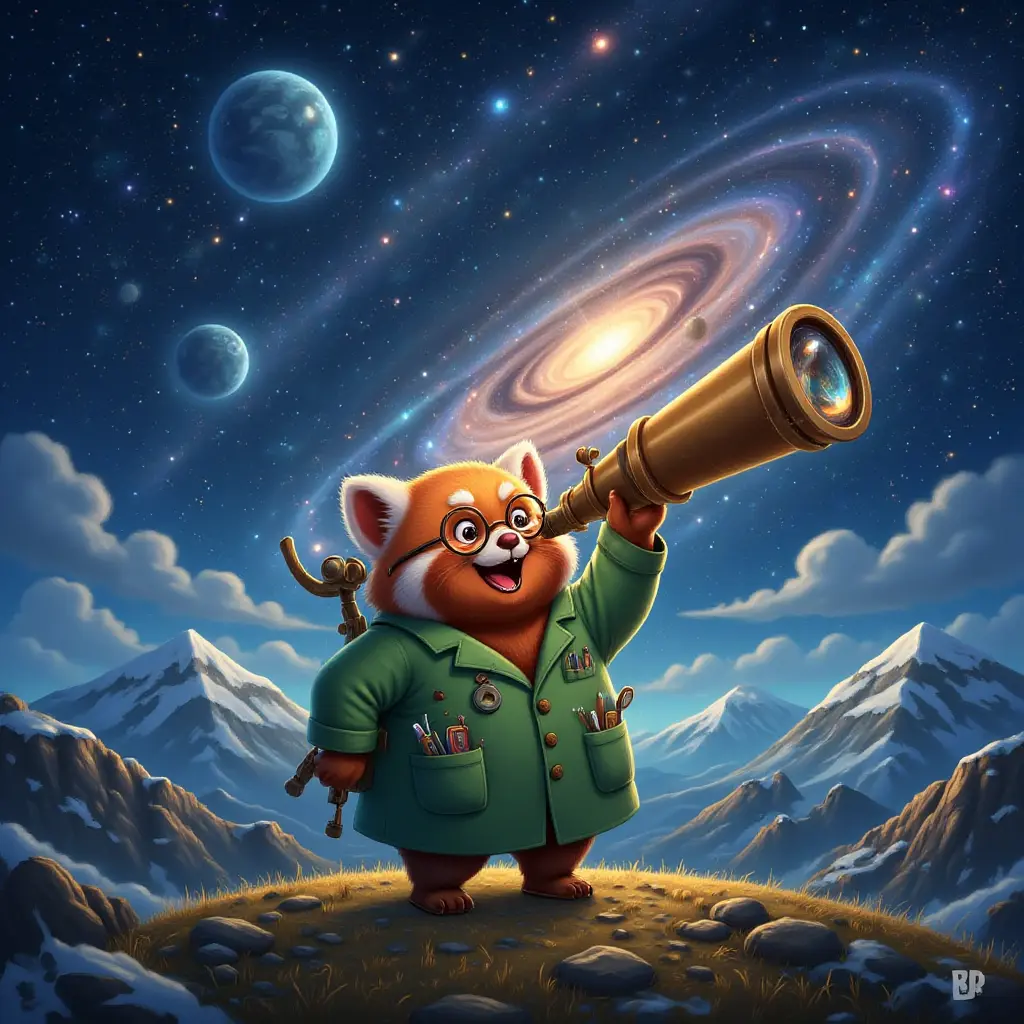
Professor Pip enthusiastically looking through a large brass telescope, set up on a grassy hill, with a clear, star-filled night sky and a vibrant nebula visible in the background.
Professor Pip's Sound Wave Adventure
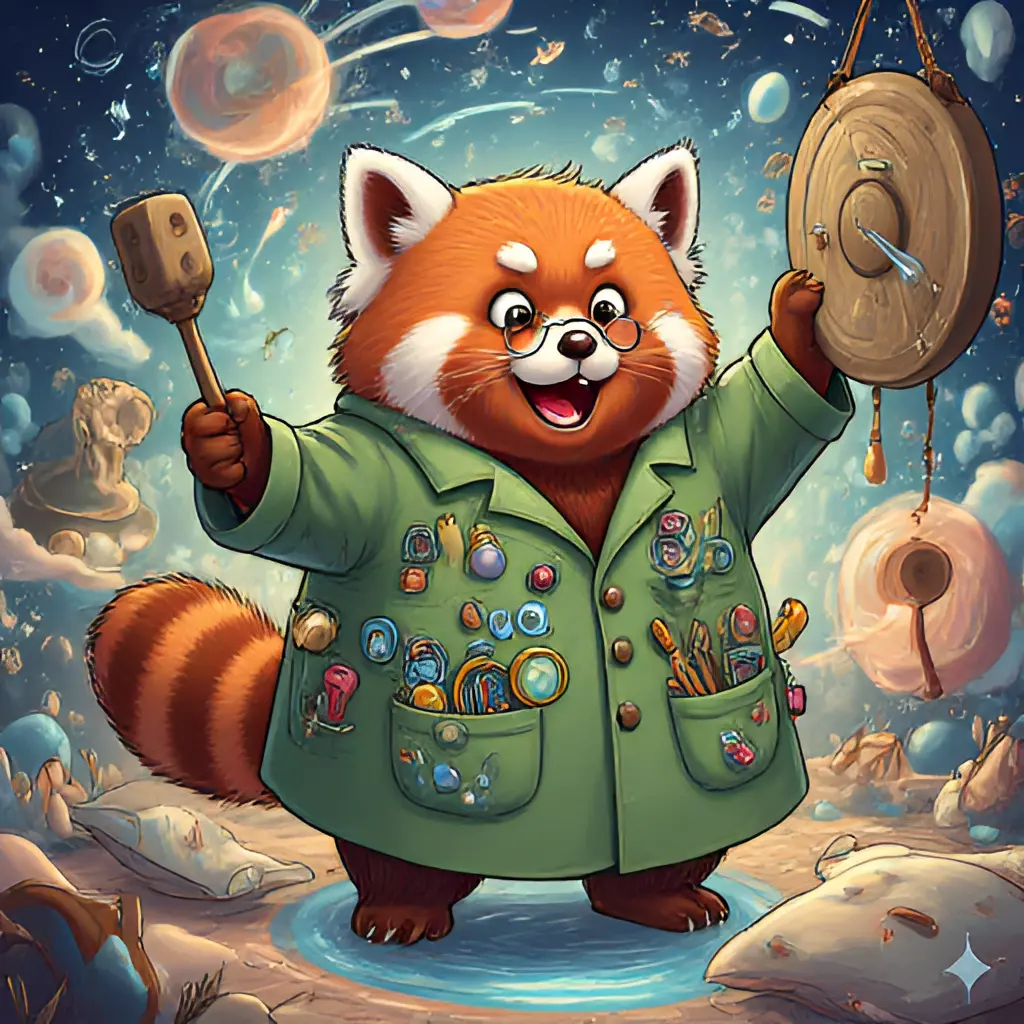
What makes a loud noise different from a quiet one? Professor Pip demonstrates the science of sound waves and vibrations, showing how everything from a gentle whisper to a big bang travels through the air.
Professor Pip and the Enchanted Fireflies: A Forest Adventure
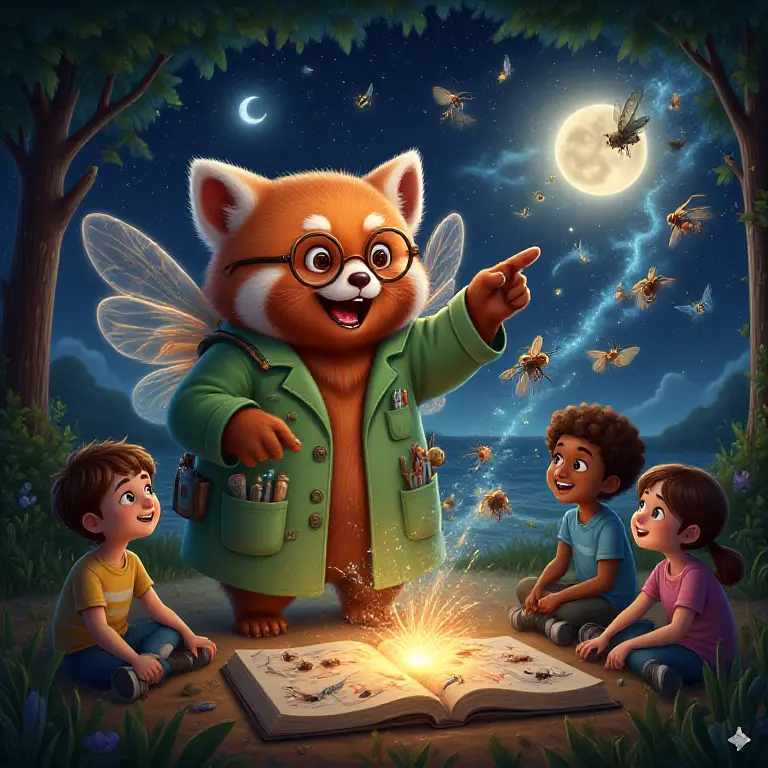
How do fireflies light up the night? Professor Pip shines a light on the science of bioluminescence, teaching kids about how these tiny creatures create their own beautiful glow.
Professor Pip's Icy Adventure: A Journey into the World of Freezing Water

Dive into the chilly world of freezing water with Professor Pip! Learn how liquid water turns into solid ice, discovering the science of molecules and temperature changes.
Professor Pip's Incredible Invention: A Tale of Teamwork and Ingenuity
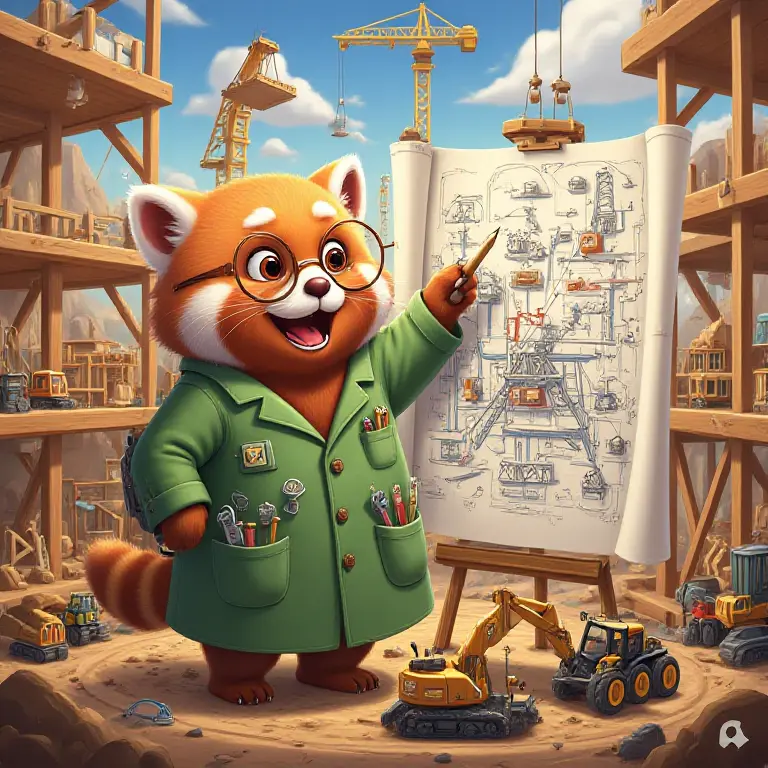
Professor Pip reviewing a large blueprint with a pencil, standing in front of a busy, small-scale construction site with wooden beams and miniature equipment.
Professor Pip's Green Thumb Adventure: The Magic of Photosynthesis
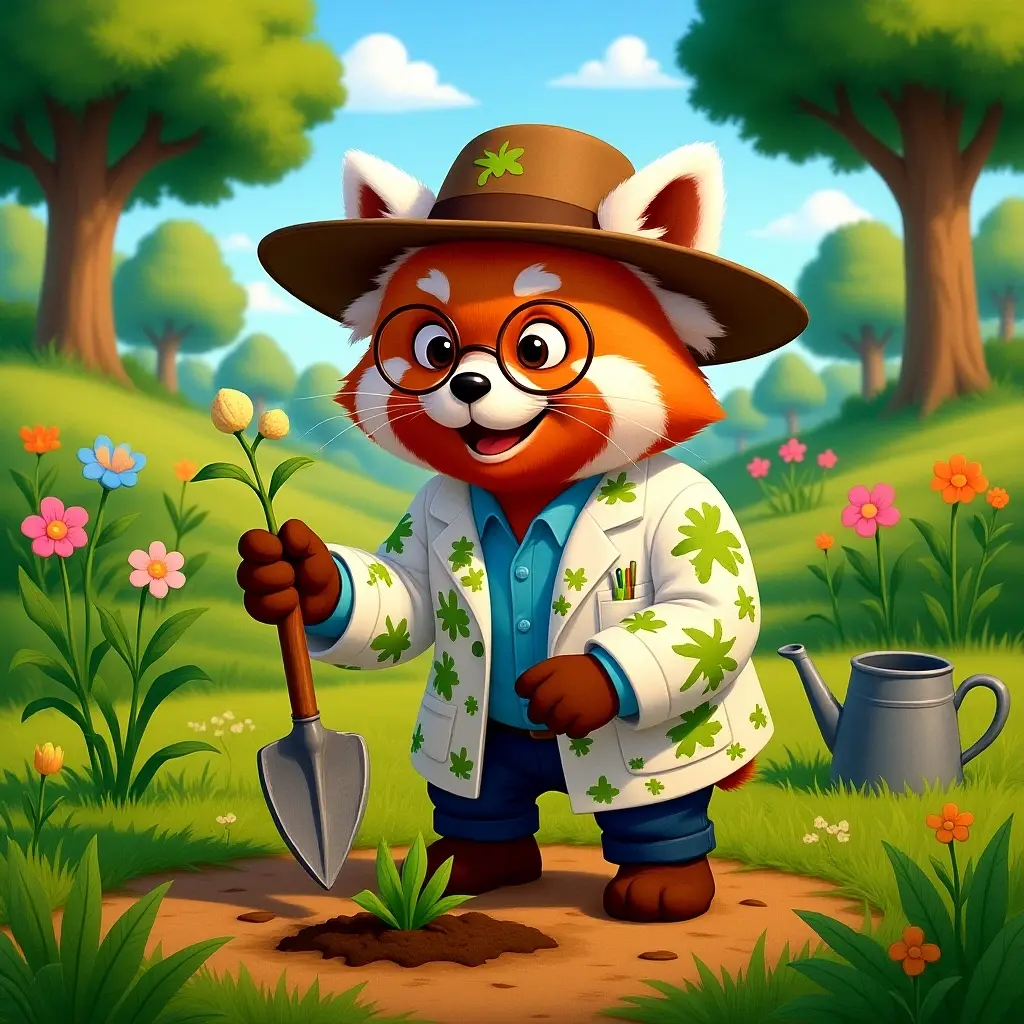
What makes a tiny seed grow into a big plant? Professor Pip digs into the science of photosynthesis, explaining how plants use sunlight, water, and air to grow and thrive.
Professor Pip and the Secrets of the Silver Screen
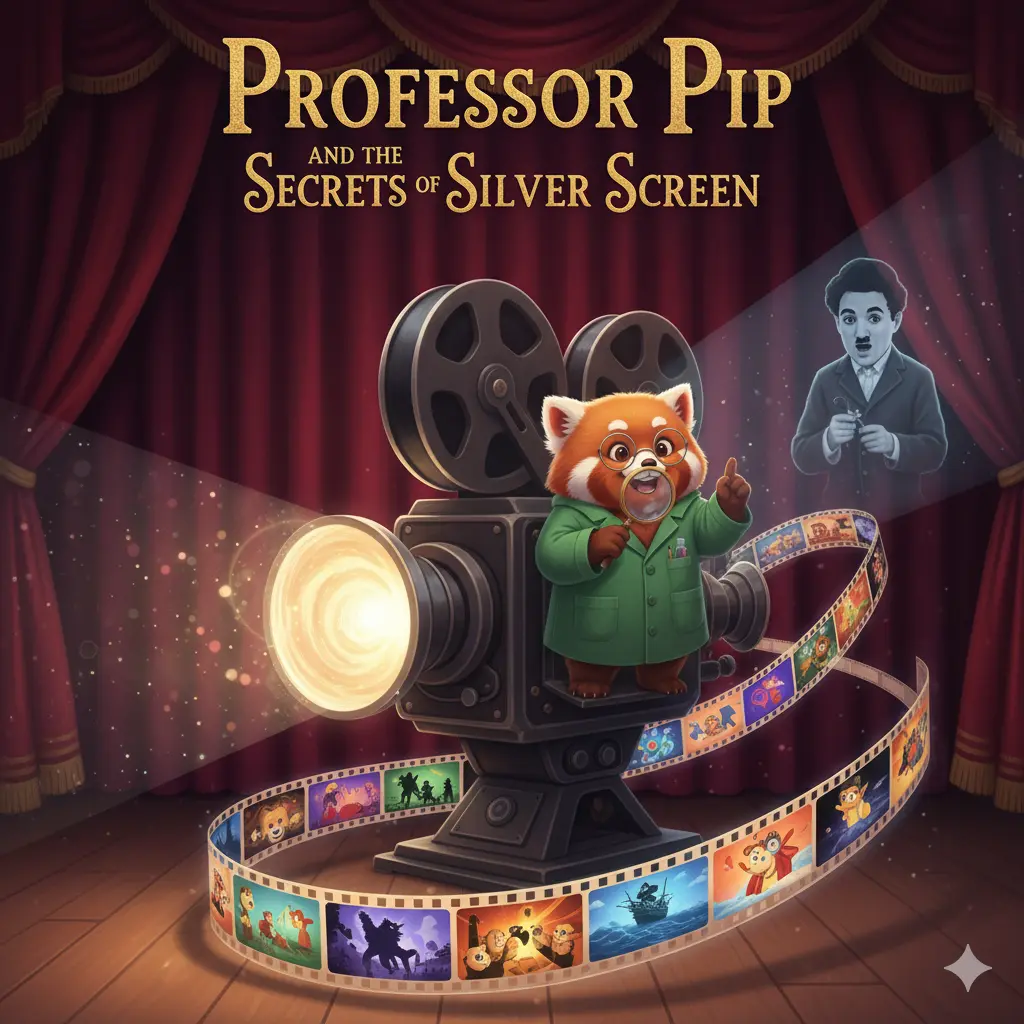
This children's book features engaging narratives and vibrant illustrations to cultivate imagination, foster creativity, and teach valuable lessons to young readers.
Professor Pip's Bug Adventure: Discovering the Wonders of Insects
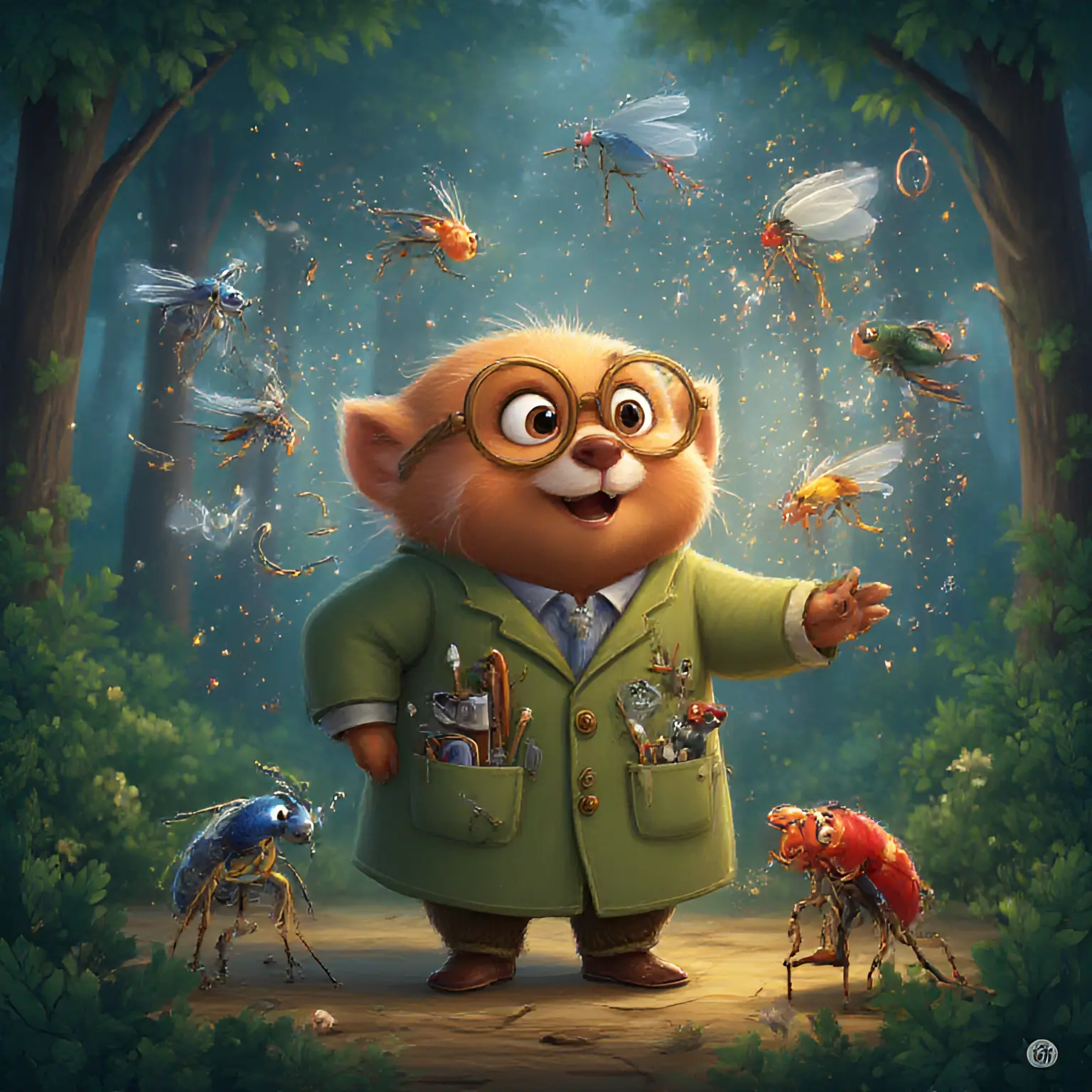
This children's book text is a whimsical journey filled with colorful illustrations and engaging characters, designed to stimulate kids' imaginations, teach valuable lessons, and foster a lifelong love of reading.
Professor Pip's Tornado Twirl
What makes a tornado spin? Professor Pip shows how swirling winds and clouds can create a powerful vortex, explaining the science of these incredible weather phenomena.

This children's book features engaging text that captivates young readers with fascinating stories, fun characters, and educational content, designed to stimulate their imagination and promote a love for reading.
Professor Pip and the Day-Night Mystery
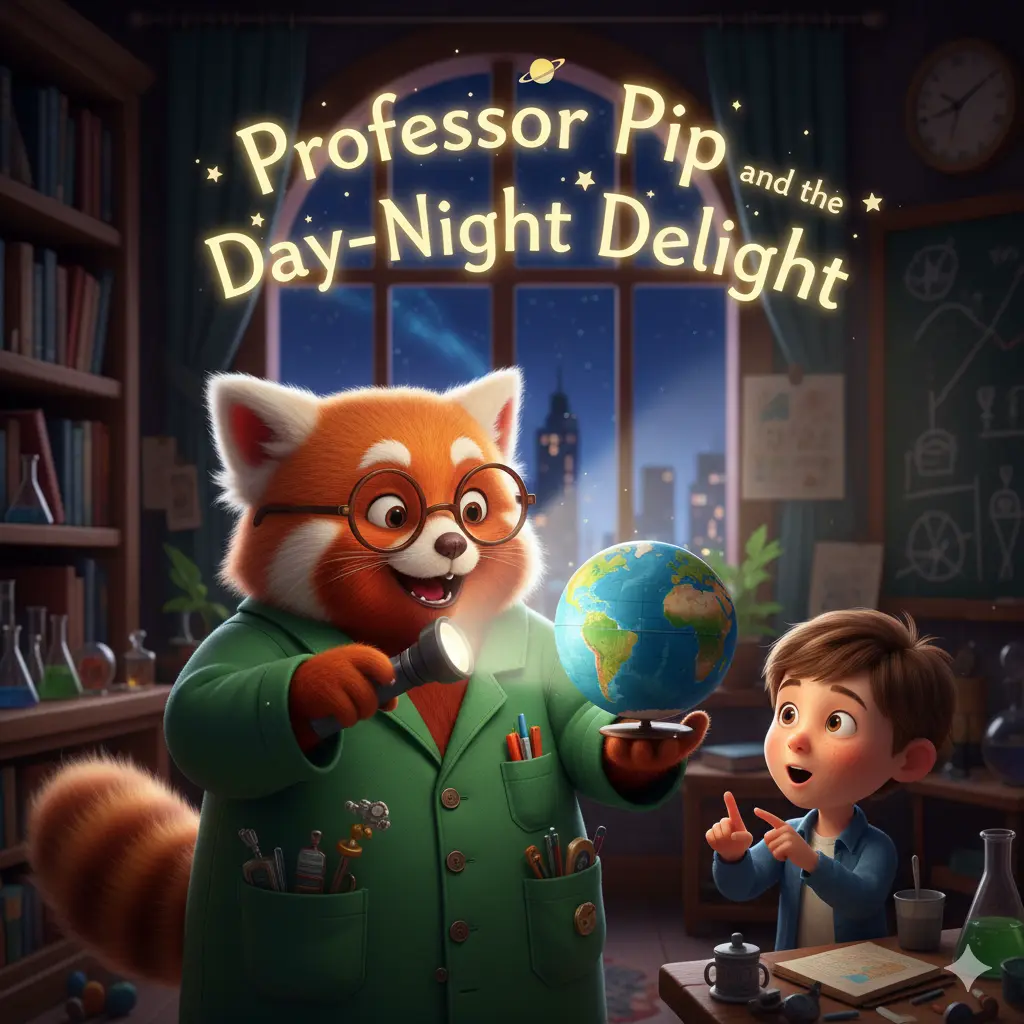
Why is it light outside during the day and dark at night? Professor Pip uses a flashlight and a globe to explain the Earth's rotation and how it creates our daily cycle of light and darkness.
Professor Pip's Volcano Adventure: Discovering the Fiery Secrets of Our Earth

What makes volcanoes go "BOOM!"? Professor Pip explains the incredible science behind volcanic eruptions, teaching kids about magma, pressure, and the Earth's fiery inner workings.
Professor Pip's Awesome Autumn Colors
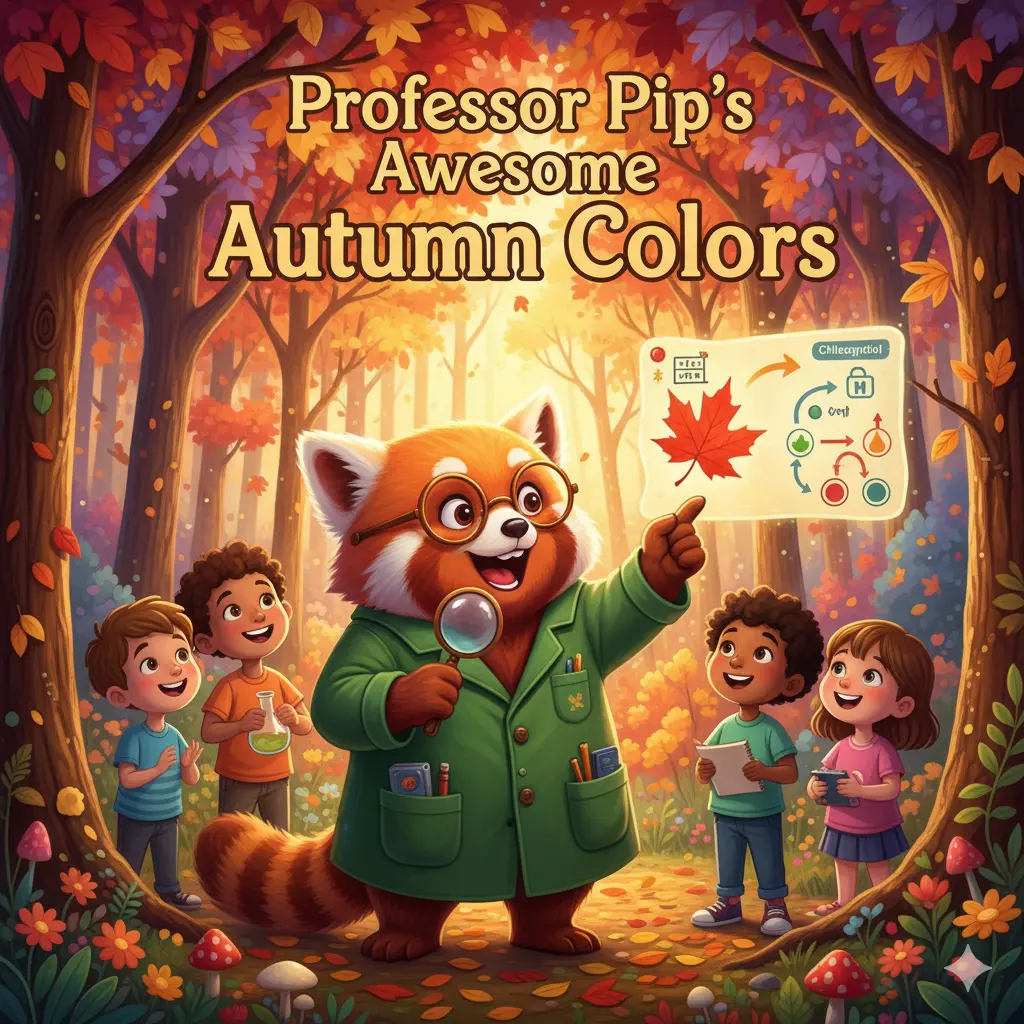
This children's book text is a fun, educational narrative that combines engaging characters and vivid illustrations, aiming to spark a child's imagination while promoting a love for reading and learning.
Stories & Updates
Read short stories and latest discoveries from the Professor Pip's Science Discovery team.
Ancient Sea Dragons Wore Invisible Diving Belts

Professor Pip stood by the riverbank with a big glass tank of water, patting his coat pockets. "Now where did I put — ah!" He pulled out two floppy balloons and a shiny brass weight the size of an acorn.Mia and Leo pr...
A Comet From Another Solar System Zipped Past — and It's Frozen Solid

Professor Pip's lab was cozy and warm, but he was rummaging through a big canvas satchel with a frown of concentration. "Aha!" he said, and pulled out a small glass jar caked in frost, with a wispy little cloud of vap...
A Tyrannosaurus Walked Right Here — Five Times

Professor Pip adjusted his slightly crooked spectacles and patted the bulging pockets of his green lab coat. "Ah! Just the thing!" he said, pulling out a long, coiled-up brass measuring tape and a small pot of soft mu...
The Deep-Sea Fish That Walks Sideways and Backwards

Professor Pip crouched at the edge of a sunny tide pool and pulled a long brass magnifying glass from his coat pocket. His crooked spectacles slid down his snout as he peered into the water."Aha! There you are, little...
James Webb Peeks Inside a Cosmic Treasure Chest of Baby Stars

Up on the hilltop, the sky was pinned all over with stars. Professor Pip fiddled with his little brass telescope, then patted his lab coat pockets and pulled out — of all things — a small wooden treasure chest.Beatrix...
A Giant Brazilian Dinosaur Discovered Beneath a Road

Professor Pip stood at the bottom of a very deep, very dusty pit, brushing gently at something enormous. His forest-green lab coat was smudged from hem to elbow."Oh my whiskers," he breathed. "Look at the size of this...
A Bus-Sized Telescope Blasts Off to Hunt Hidden Galaxies

The sun was slipping behind the pines when Professor Pip clambered up the hill, tail swishing, pockets clinking. His crooked spectacles slid halfway down his nose. "Oh, splendid!" he said, patting the picnic blanket w...
A 10-Year-Old Spots a 3,000-Year-Old Whale Skull on the Beach

Professor Pip crunched across the pebble-strewn beach, waves whooshing behind him. He patted his pockets — magnifying glass, brass compass, and a soft little brush no bigger than a toothbrush. "Ah!" he said, kneeling ...
Whales Lift a Newborn to the Surface — Together

Professor Pip stood on the sun-warmed dock, waves lapping quietly below. He fished a tiny wooden whale calf out of one deep pocket and, with a mysterious little smile, held it above his head. "Today, my fellow scienti...
A New Dinosaur Discovered on a Hippo-Filled Lake in Zimbabwe

The sun was orange and low over Lake Kariba. Professor Pip crouched on a rocky shore, humming to himself, tail twitching. From one pocket he pulled a small, soft brush. From another, a magnifying glass. From a THIRD p...
Saturn Grew a Ten-Sided Storm — And Hubble Just Caught It

Up on the hilltop observatory, Professor Pip's tail swished wildly. "Come, come, my fellow scientists — you must see this!" He patted his pockets: pencil, notebook, tape measure, and a shiny brass compass. All present...
Peeking at Penguins Through the Polar Dark — From Space!

Professor Pip adjusted his slightly crooked spectacles and stamped his fluffy little boots in the snow. "Brrrrr! Ah! Just what I need." He patted the bulging pockets of his forest-green lab coat and pulled out a small...
A brand-new eye in the sky sets off for the dark universe

Professor Pip patted his bulging green pockets and pulled out two crinkled cardboard tubes — one skinny like a drinking straw, the other fat like a paper-towel roll."Ah! Just the thing," he beamed, adjusting his crook...
A fish that walks sideways — and moonwalks backward!

Professor Pip crouched by the riverbank, his fluffy tail swishing behind him, magnifying glass pressed to a shallow glass tank. Inside the tank, something extremely peculiar was happening: a fish was walking."Curiouse...
A dinosaur that kept its skin for 110 million years

Professor Pip knelt in a sunlit forest clearing, a tiny brush in one paw and a lumpy clay model of a dinosaur beside him. He'd painted it a soft reddish-brown, with rows of bumpy armor plates and long spikes coming of...
The Fish That Walks Sideways — and Backwards!

Professor Pip's pockets were dripping. He had just come up from the riverbank carrying a great glass bowl of water — and inside the bowl, something orange scuttled sideways across the pebbles."Oh my whiskers!" he crie...
A Dinosaur the Size of a Chicken (Living Among Giants)

Professor Pip knelt on a patch of rusty-red sandstone and pulled a very tiny fossil brush from a very stuffed pocket. His forest-green lab coat was smudged with desert dust. His spectacles slid almost off his nose."Ah...
NASA Sends a Giant New Eye Into Space

Professor Pip adjusted his slightly crooked spectacles and patted his forest-green lab coat until something clinked. "Ah, precisely!" he said, pulling out a small brass telescope and a rolled-up star chart.The hilltop...
A tiny red dot in the sky turned out to be a 'black hole star'

Night had fallen on the hilltop. Professor Pip fumbled in his lab-coat pockets and pulled out a small brass telescope, a plaid blanket, and — after a moment of searching — a metal funnel and a jug of water."Look up, m...
Narwhals are helping scientists visit a place no boat can go

Professor Pip zipped up his fuzzy scarf and clambered onto a little wooden boat, his forest-green lab coat flapping in the polar wind. The fjord stretched out around him — icy blue water, snowy peaks, and pale chunks ...
The bug with twenty-four legs (and why today's bugs have only six)

Professor Pip adjusted his slightly crooked spectacles and patted the bulging pockets of his forest-green lab coat. "Ah! Curiouser and curiouser," he murmured, sliding a small slab of gray rock onto the workbench.Mia ...
The Tiny Flyer That Rides on a Whisper

Professor Pip adjusted his slightly crooked spectacles and patted the bulging pockets of his forest-green lab coat. "Aha! Just the thing," he said, pulling out an empty glass bottle and a tiny paper flyer no bigger th...
A Spike-Backed Dinosaur Wakes Up in Japan

The tide had just gone out when Professor Pip skidded to a stop on the rocky Hokkaido shore, spectacles bouncing on his nose. He patted every pocket of his forest-green lab coat and pulled out a tiny fossil brush, his...
Gravity Made a Magnifying Glass in the Sky

The sky was just turning purple when Professor Pip set his little brass telescope on the hilltop grass. He rummaged in a pocket, then another, then another, and finally pulled out a large curved glass paperweight the ...
Astronomers Spot a "Star" That's Really a Hidden Black Hole

Professor Pip pushed his crooked spectacles up his nose and lifted a small brass telescope out of his coat pocket. Behind him, the sky was turning the color of a bruised plum. "Tonight, my fellow scientists," he whisp...
A Construction Crew in Brazil Dug Up a Dinosaur As Long As Two School Buses

The dust in the air smelled like hot stone. Professor Pip stood at the edge of a great red pit, brush in one paw and pocket notebook labeled "Notes" in the other. Behind him, poking out of the earth, were rib bones ta...
A Mama Dolphin Named Maserati Taught Her Baby a Tool Trick

Professor Pip stood on a sunny wooden dock, his tail flicking against the boards. The bay sparkled turquoise. From his enormous coat pocket he produced — well, a very large, empty spiral seashell, about the size of a ...
Meet S301: The Fastest Star Ever Found

Professor Pip stood on the hilltop, his spectacles slipping down his nose. He patted the bulging pockets of his forest-green lab coat and pulled out a small brass telescope, a marble, and a long piece of string."Ah!" ...
The World's Biggest Glowing Animal — and Why It's Sparkly

"Everyone, into the dark corner of the lab!" cried Professor Pip. He turned off the overhead light and pulled out his pocket notebook, a glow-stick, and a paper shark he'd cut out that morning.Mia, Leo, and Beatrix sh...
A "Golden Tree" Grows Under the Sea

"Curiouser and curiouser!" cried Professor Pip, patting his pockets on a rocky beach at sunset. He pulled out a magnifying glass, a small notebook labeled "Notes," and — with a great deal of tail-swishing — a wide gla...
Hundreds of Tiny Blue "Sailors" Wash Up on a British Beach

Professor Pip crouched at the edge of the surf, his fluffy tail flicking bits of wet sand as the sea whispered in and out. He patted his lab coat pockets and pulled out his trusty magnifying glass, a little paper boat...
A 70-Million-Year-Old Egg Uncovered in Patagonia

Professor Pip adjusted his slightly crooked spectacles and patted the pockets of his forest-green lab coat until he found what he needed. Out came a tiny brush with soft bristles, and a small brass compass that clinke...
Astronomers Spot a Brand-New Kind of Cosmic Object: A "Black Hole Star"

Professor Pip climbed a grassy hilltop just as the stars were beginning to peek out. He set down his little brass telescope and pulled a fluffy pom-pom and a small marble from his lab coat pocket."Oh my whiskers, look...
A NASA rover zapped a rock on Mars — and found a gemstone hiding inside

Professor Pip stood on a pretend-Mars — a bumpy patch of red dirt in the corner of his garden — and adjusted his slightly crooked spectacles. "Ah! Look at this, my friends. Rusty. Dusty. And full of surprises." He pat...
A 70-million-year-old dinosaur egg (with maybe a baby inside!)

Professor Pip crouched in a sandy patch under a big old oak tree and swished his fluffy ringed tail with excitement. "Oh my whiskers, oh my whiskers," he whispered. He pulled a small brass fossil brush from his pocket...
There's WATER hiding right next to our galaxy's giant black hole

Professor Pip stood on a hilltop at nighttime, patted his forest-green lab coat pockets, and pulled out his small brass telescope and a very small glass of water. His fluffy tail swished with delight."Curiouser and cu...
The 'Blessed Lizard' Who Ruled Before Dinosaurs

Professor Pip knelt in the red rocky dust of a canyon and pulled a small brush from his lab-coat pocket. Beside him, Mia and Leo held their breath."Watch this," Pip whispered, sweeping the brush across a jagged shape ...
Two Planets as Fluffy as Cotton Candy

Professor Pip pushed his crooked spectacles up his nose and patted the bulging pockets of his forest-green lab coat. "Ah! Just what today calls for," he said, and out came the strangest pair of things: an enormous pin...
Why the Fish Are Suddenly Swimming Somewhere Else

By the riverbank, Professor Pip had set up something odd: a big clear glass tank, a small pitcher of icy water, and — from the biggest pocket of his lab coat — a chemistry flask of warm water with steam curling gently...
Wild fish can tell one human from another (and remember!)

Professor Pip stood at the end of a sun-warmed wooden dock, a bright red neckerchief tied jauntily over his forest-green lab coat. Below him, silvery fish flickered in the turquoise water."Beatrix! Jun! Come, come — t...
Meet the spider that builds a real live catapult

Professor Pip crouched low in a sunny rainforest clearing, his forest-green lab coat dusted with moss. From a bulging pocket he pulled out a bent green twig, a rubber band, and a small brown acorn."Gather round, gathe...
Tiny dust clumps hide from a dying star — and become tomorrow's planets

Professor Pip adjusted his slightly crooked spectacles and gazed up at the darkening sky. "Ah! Mia, Leo, Asha — come quickly. Tonight we chase a very sneaky idea."Three children scrambled up the grassy hill and ploppe...
Why the Biggest Egg on Earth Beat Every Dinosaur

Professor Pip pushed open the tall doors of the museum's egg hall and adjusted his slightly crooked spectacles. "Ah! Now this is what I've been waiting to show you."On a wooden pedestal sat an egg the size of a soccer...
The Very First Wigglers: 567-Million-Year-Old Fossils in Canada

The riverbank was chilly and the wind smelled of moss. Professor Pip crouched down, pulled a tiny brush from his pocket, and swept the dust off a flat gray rock."Come look, my fellow scientists," he whispered. "You ar...
Peeking Inside a Cosmic Treasure Chest Full of Baby Stars

The hilltop was cool and dark. Professor Pip patted his lab coat pockets, pulled out his small brass telescope, and pointed it straight up."Fellow scientists," he whispered, "tonight we're going to visit a nursery. Bu...
Neptune's Ancient Moon Smash-Up

Back in Pip's cozy lab, the desk lamp glowed amber. Pip crouched at the edge of the big wooden table, tail flicking in excitement. Mia and Leo leaned in, chins on paws."Today," Professor Pip whispered dramatically, "w...
Mars Was Rustier — and Wetter — Than We Knew

Out on the sunny porch, Professor Pip knelt beside a shiny metal tray with two long iron nails on it. His magnifying glass caught the light. Mia, Leo, and Theo hurried up the steps, curious."Look closely," Pip said, h...
A New Telescope Learns to Catch Solar Storms

Professor Pip stood on a grassy hilltop at golden hour, his fluffy tail swishing behind him. He adjusted his slightly crooked spectacles and patted the bulging pockets of his forest-green lab coat."Ah! There you are!"...
A Rocket Is About to Punch a New Crater on the Moon

Professor Pip adjusted his slightly crooked spectacles and patted the bulging pockets of his forest-green lab coat. "Ah! Precisely what I need," he said, pulling out a shallow wooden tray, a bag of flour, a jar of coc...
Meet Musango: A New Dinosaur From the Shores of Lake Kariba

Professor Pip crouched down on the warm red dirt by the lake, pulled a soft brush and a little magnifying glass from his lab coat, and began, ever so gently, to sweep, sweep, sweep at a knobby lump poking out of the g...
Astronomers Spot the First Moon Outside Our Solar System

The stars were out in full sparkle. Professor Pip pulled a small brass gadget from his coat pocket — a little sun in the middle, with tiny wire arms holding a blue bead and, on an even tinier arm, a dark speck."Oh my ...
A Brand-New Dinosaur Just Walked Out of a Zimbabwe Lake

Professor Pip was very carefully NOT stepping on a rock. Jun and Sofia leaned in closer, holding their breath. In front of them, poking up out of the sand along the lakeshore, was something that looked exactly like a ...
The Big Red Star Had a Secret Friend All Along

Professor Pip adjusted his slightly crooked spectacles and patted the bulging pockets of his forest-green lab coat until he found what he wanted. Out came his small brass telescope, cool and heavy in his paw. "Ah! Jus...
A Tiny Hunter Lives Where the Ocean Squeezes 790 Times Harder

Down at the riverbank, Professor Pip had built a very peculiar tower. It was a tall, teetering stack of pancakes. Asha and Theo stared. "Um, Professor," Asha said politely, "why are you stacking your breakfast?" "Ah!"...
A Fossil Caught Three Prehistoric Beasts at Dinner

Professor Pip pushed his slightly crooked spectacles up on his nose and rummaged excitedly through a wooden crate in the corner of his lab. "Ah-HA!" he cried, pulling out three little figurines and setting them on his...
A New Shark Was Found — And It Walks!

Professor Pip crouched down in the warm, ankle-deep water and adjusted his slightly crooked spectacles. "Ah! Look here, my fellow scientists," he whispered, patting the bulging pockets of his forest-green lab coat and...
A Houseplant Is Secretly Doing Math

Professor Pip was pottering around his greenhouse, humming to himself among the ferns and the tomato vines, when Mia and Leo tumbled through the door."Professor Pip! Professor Pip!" they called. "What ARE you doing?"P...
A New NASA Telescope That Sees a Hundred Skies at Once

Professor Pip climbed to the top of a grassy hill just as the sky was turning purple. His crooked spectacles slid down his nose, and his tail swished excitedly behind him. "Ah! Just in time," he whispered, pulling a s...
The Monkey the Forest Hid for Twenty Years

Professor Pip trotted along a misty forest path, tail swishing, his big brass magnifying glass held up like a knight's shield. "Follow closely, my fellow scientists!" he called. "The forest is full of clues today."Mia...
What Do Whale Sharks Do When Nobody's Watching?

Professor Pip knelt on the warm wooden dock, humming to himself. Beside him on a little red wagon sat a big polka-dotted plush whale shark he'd nicknamed Marlow. In one paw, Pip held a tiny brass gadget the size of a ...
Jupiter's Little Moon Is Cooking From The Inside

Professor Pip patted his bulging green lab-coat pockets and pulled out a soft blob of orange clay. His crooked spectacles slid down his nose, and he pushed them back up with one paw. "Ah! Just the thing," he said, set...
An 18-Second Video Solved A Desert Mystery

Professor Pip knelt in the warm sand of a golden desert dune. His fluffy tail curled behind him, and his crooked spectacles glowed rose in the sunset light. From one bulging pocket he pulled out a small camera, and fr...
A Ghostly Little Squid Says Hello To A Robot

Professor Pip crouched beside a big glass tub full of icy water. A tiny paper iceberg bobbed on the surface, and floating on the bottom of the tub was a bright-yellow toy submarine with a little camera on its nose. "C...
A Robot on Mars Finds the Oldest Bedtime Story

Professor Pip stood on top of a rocky hill just as the sun was thinking about going down. He held his round brass magnifying glass in one paw and, from another pocket, produced a small striped rock about the size of a...
The Raccoons Who Wouldn't Give Up

Professor Pip patted the pockets of his forest-green lab coat and pulled out a wooden box the size of a lunchbox. It had four different silver latches on the lid: a hook, a slider, a spinning dial, and a lifting bar."...
The Garden at the Bottom of the Sea

Professor Pip adjusted his slightly crooked spectacles and reached into the biggest pocket of his forest-green lab coat. Out came a heavy glass jar with a screw-top lid, filled with dark water and tall, waving red cre...
A Shy Monkey with Orange Lips Steps Out of the Trees

Professor Pip adjusted his slightly crooked spectacles and patted the bulging pockets of his forest-green lab coat. Out came a small brass telescope, a pocket notebook labeled "Notes," and a folded photograph.Mia, Leo...
A T. Rex Left Its Tooth in a Dinosaur's Face (65 Million Years Ago!)

The lamp in Professor Pip's laboratory glowed warm and amber. On his big wooden workbench sat a huge, ancient dinosaur skull — long and duck-billed, with a mouth full of flat plant-chewing teeth.Mia, Leo, and their fr...
A Robot That Can Fly AND Swim (Thanks to a Puffin)

Professor Pip stood at the sunny edge of a little pond, patting his forest-green lab coat. Out came a paper airplane, a small plastic cup of water, and a tiny brass gear. His tail swished in triumph."Fellow scientists...
A Secret Monkey Was Watching Us From the Trees

Professor Pip stood in a warm, misty rainforest clearing, ferns brushing his ankles and a slice of blue sky peeking through the enormous green ceiling above. "Curiouser and curiouser!" he whispered, patting his pocket...
The Fish With a Window in Its Head Says Hello

The lab was dark except for one soft blue glow — Professor Pip's biggest aquarium, bubbling gently in the corner. "Oh my whiskers!" Pip whispered, tail swishing so hard it thumped a table. "You are going to LOVE this....
A Planet Playing Hide-and-Seek for Ten Whole Years

Professor Pip's little brass telescope was still warm from the twilight sky when he tumbled through the observatory door, spectacles slipping down his nose. "Oh my whiskers, look what took me ten years to see!" he lau...
One Little Bone Reveals a Giant Long-Necked Dinosaur

Professor Pip patted the sandy soil and let out a happy whumf. “Ah! Here we are, my brave paleontologists — a fossil dig in the sun!” Mia, Leo, and their new friend Asha crouched around a patch of tan rock. In the mid...
Scientists Found a Sweet Sugar Floating Near the Milky Way's Heart

Professor Pip nudged his crooked spectacles up his nose and grinned at the open dome above his head. A river of stars spilled across the sky, so bright that Mia and Leo could see each other’s faces in the starlight. “...
A See-Through Fish Was Just Filmed Alive in the Deep Sea

Professor Pip’s fluffy tail was bouncing so much it nearly knocked over a lantern. On the deck of the Little Compass, a sturdy little research boat, he cradled a large glass jar of seawater against the pink twilight s...
One Old Bone, A Whole New Dinosaur

Professor Pip pushed his crooked spectacles up his nose and patted his bulging green coat pockets. "Ah! Just what I need," he said, tugging out a small brass magnifying glass and his little notebook labeled Notes.In f...
The Shark That Takes a Stroll

Professor Pip was crouched on a smooth wet rock at the edge of a tropical reef when the children came racing up, sandy feet slapping."Professor! Professor! What are you looking at?!"Pip pressed a paw to his lips. "Shh...
A Fish With a See-Through Head

Inside Professor Pip's cozy little lab, the lamps were dim and a great glass tank of dark, dark water glowed a soft blue-green in the middle of the room."Come closer, come closer!" whispered Pip, pressing his paw agai...
Two Galaxies Crashed, Twirled, and Made a Cosmic Masterpiece

Professor Pip stepped out onto the porch just as the last streak of sunset faded from the sky. He adjusted his crooked spectacles, patted his bulging green lab-coat pockets, and pulled out two small glass bowls — one ...
A Baby Dinosaur Was Found Hiding Inside a Rock — Without Cracking It Open

Professor Pip set a chunky brown rock on his workbench and grinned. He adjusted his crooked spectacles, patted his bulging green lab-coat pockets, and pulled out a small brass flashlight — and then a wobbly block of p...
A 125-Million-Year-Old Shark Was Finally Filmed Alive

Professor Pip's cozy lab glowed with warm amber lamplight. He adjusted his crooked spectacles, patted the bulging pockets of his forest-green lab coat, and pulled out a stack of colored cardstock plates — bright sunli...
Robots Dive Deep and Find 31 Brand-New Sea Creatures!

Twilight had settled over the porch. Professor Pip crouched beside a shallow tin tray filled with dark water, patting his gadget pockets. "Ah! Perfect timing," he said, pulling out a tiny brass flashlight, a chemistry...
Bumblebees Lick Their Lips When They Like a Treat!

The wildflower meadow buzzed with warm afternoon sun. Professor Pip crouched beside a wooden bench where he had set out two tiny white ceramic saucers. One was full of golden honey-water. The other was full of dark, b...
A Dinosaur Was Hiding in a Museum Drawer for 40 Years!

Professor Pip adjusted his crooked spectacles and clambered up onto a small wooden step-stool. He was in the very back room of a natural history museum, where enormous wooden drawers stretched from floor to ceiling — ...
🪐 Two Giant Planets Lighter Than Cotton Candy

Professor Pip's lab smelled, unexpectedly, of sugar. He was standing at his workbench, tail swishing with excitement, holding a fluffy pink cloud of cotton candy in one paw and a small grey pebble in the other. "Fello...
🕷️ Meet the Ballista Spider — a Bug-Catapult From Down Under

Professor Pip crouched on a mossy patch of the Australian rainforest, patting his bulging pockets. "Ah! Just what I need," he said, pulling out a small green rubber band and two smooth twigs. Mia and Leo peered over h...
🦕 A Dinosaur Was Hiding in a Museum Drawer for Forty Years

The museum backroom smelled of old wood and older secrets. Professor Pip padded down the aisle between rows of tall cabinets, his tail swishing softly. Mia and Leo followed close behind, ducking under a lamp that hung...
Giants Under the Ice: A Dinosaur Turns Up in Antarctica

Professor Pip adjusted his slightly crooked spectacles and stomped his boots to shake off the powdery snow. Around him, warm-glowing tents flapped in the wind, and cold blue light spilled across a rocky slope. He patt...
The Planet That Outlived Its Own Sun

Professor Pip stood on a grassy hilltop, his brass telescope propped on its tripod. Twilight was turning the sky deep purple, and one bright pinkish glow flickered on the horizon. He patted his lab coat pockets and pu...
Meet the Little Shark That Walks in the Moonlight

Professor Pip crouched at the edge of a warm, shallow tidepool. The sky above was black and full of stars, and palm trees swayed silently in the salty breeze. He held a small lantern high, and the glow rippled across ...
The Tiny Spider That Catapults Its Dinner Into the Air

📚 A Story from Professor Pip Professor Pip patted his coat pockets. "I know I had a slingshot in here somewhere…" Out came a tiny wooden Y-shape with a rubber band stretched between the prongs, then a small pebble, th...
A Dinosaur Bone Hides in a Drawer for 40 Years

📚 A Story from Professor Pip Professor Pip adjusted his slightly crooked spectacles and patted the bulging pockets of his green lab coat. "Ah! Just what I need," he murmured, pulling out a brass magnifying glass and a...
Astronomers Spot a New Earth-Sized World Right Next Door

📚 A Story from Professor Pip Professor Pip set down his picnic basket and patted his pockets. "Ah, here we are — yes — and yes —" Out came a small brass telescope, a thermos of cocoa, and three steaming little mugs. M...
A Robot With Three Arms Is Racing Up to Catch a Falling Telescope

Professor Pip rummaged in his pockets on the front porch. "Now, where is that — ah! There you are." Out came a long-handled grabber tool with three pinching fingers at the end. From another pocket, a little cardboard ...
Astronomers Find Two Giant "Cotton Candy Planets" Lighter Than Air

Professor Pip adjusted his crooked spectacles and patted the bulging pockets of his green lab coat. "Ah-ha! Just the thing." Out came a fluffy pink puff of cotton candy — and out of the other pocket, a tiny glass jar ...
Tiny Feathered Dinosaur Glided Between Trees Like a Flying Squirrel

Professor Pip patted his lab-coat pockets and pulled out a folded piece of paper. "Aha! Just the thing for a hillside afternoon." Mia, Leo, and their friend Asha sat cross-legged in the grass under a tall pine. Pip's ...
Astronomers Just Found Planets Fluffier Than Cotton Candy

The sun was just dipping behind the hills when Professor Pip rummaged in his pockets and pulled out the strangest pair of objects: a giant pink-and-blue cloud of cotton candy on a stick, and a tiny grey pebble. "Tonig...
Meet the Tiny Dinosaur That Flew Like a Squirrel

Professor Pip adjusted his slightly crooked spectacles and patted the bulging pockets of his green lab coat. Out came a pair of folded paper wings, a roll of string, and a wide grin. "Today, my fellow scientists," he ...
Divers Find a Coral Older Than Your Country in a New Zealand Fjord

Professor Pip waddled down to the edge of the tide pool, his green lab coat splashed with seawater and a snorkel mask pushed up over his crooked spectacles. He plopped open his pocket notebook and pulled out a brass m...
A Tiny Spider Builds a Spring-Loaded Catapult to Catch Ants

"Watch this very carefully," whispered Professor Pip, sliding his crooked spectacles up his nose. He had crouched down in a sunny clearing, and Mia and Leo had crowded close. In his paws, Pip held a long, thin, green ...
A 12-Billion-Year-Old Snowball Just Zoomed Through Our Sky

Professor Pip adjusted his slightly crooked spectacles and squinted up at the deepening sky. The first stars were beginning to wink on above the hilltop. "Ah! Perfect timing," he said, patting his bulging green lab co...
A Sea Cucumber's Tiny "Toes" Keep Living for Three Whole Years

"Now this," said Professor Pip, kneeling carefully at the edge of a glittering tide pool, "is a question I find delicious." He held up his chemistry flask — full of clear, salty seawater — and squinted at it through h...
A Wobbly Space Peanut Tumbles Through the Stars

📚 A Story from Professor Pip Professor Pip adjusted his slightly crooked spectacles and patted the bulging pockets of his forest-green lab coat. "Ah! Just what I need," he said, pulling out a lump of grey clay shaped ...
The Pop-Out-Jaw Shark Nobody Had Ever Filmed

📚 A Story from Professor Pip Professor Pip stood in his cozy wood-paneled lab, beside a tall round aquarium tank lit from above by a single beam of light. The water in the tank looked dark and mysterious, like the dee...
A Cartoon Character Inspired a Real Baby Dinosaur's Name

📚 A Story from Professor Pip Professor Pip pushed his crooked spectacles up his nose and patted his pockets, sending up a small puff of garden dust. "Ah! There you are," he said, fishing out a soft fossil brush and hi...
The spider that dressed up as the thing that eats spiders

Professor Pip crouched low on a mossy log, his bushy tail curled neatly behind him, magnifying glass raised in one paw. "Ssshhh," he whispered to the children behind him. "Look very carefully. Do you see it?" The kids...
A peanut-shaped asteroid that just can't spin straight

Professor Pip pushed his crooked spectacles up his nose and patted his bulging green coat pockets. "Where is it… ah-HA!" He pulled out a small peanut, still in its shell, and held it up. From another pocket came a smo...
The fossil that sat on a shelf for 66 years — and rewrote how life came on land

Professor Pip knelt on a sandy riverbank, gently sweeping his tiny fossil brush across a small reddish stone. Swish… swish… swish. Bit by bit, the brush uncovered a curling shape pressed into the rock — like a tiny li...
A 125-Million-Year-Old Shark Finally Caught on Camera!

Professor Pip's lab was glowing amber in the dusk light. On the workbench sat a small model of the strangest fish anyone had ever seen — pinkish-grey, with a long flat snout like a sword and a mouth that did not sit w...
Watch a Whole Planet Vanish in the Daytime Sky Tomorrow!

Professor Pip adjusted his slightly crooked spectacles and patted the bulging pockets of his green lab coat. "Aha! Here we are." He pulled out his small brass telescope, his pocket notebook labeled Notes, and — for so...
Honey Bees Have Their Own Tiny Highways in the Sky

Professor Pip sat in the warm meadow beside an old wooden beehive, his bushy tail curled neatly around his paws. The air buzzed gently. Bees zipped past his whiskers, in and out of the hive, on important bee business....
The Moon You Can't See — But the Ocean Sure Can

Professor Pip stood at the top of a soft, grassy hill, his lab coat flapping gently in the night breeze. Above him, the sky was the deepest blue-black, freckled with more stars than the children had ever seen. "Now th...
Tiny Crawlers Walked the Land 460 Million Years Ago

Professor Pip pushed aside a curtain of ferns and dropped to his knees on the damp forest floor. "Aha! Right where I left it." He pulled out his big round magnifying glass and pointed. Curled in the leaf litter was a ...
A Parrot Might Actually Know Your Name

Professor Pip adjusted his slightly crooked spectacles and patted the pockets of his green lab coat. "Aha! Just what I need." Out came his pocket notebook, a pencil, and a small handful of paper tags tied with string....
A faraway planet where sunset doesn't match sunrise

Professor Pip adjusted his slightly crooked spectacles and pulled out his small brass telescope from one of the bulging pockets of his green lab coat. Then he fished out a red balloon, a small flashlight, and a tiny b...
Beneath every forest, a hidden web bigger than half a galaxy

Professor Pip adjusted his slightly crooked spectacles and crouched low among the tall mossy trees. He patted his bulging lab-coat pockets and pulled out his magnifying glass and a long length of pale string. His note...
A tiny piece of frozen poop tells the secret of the Ice Age

Professor Pip adjusted his slightly crooked spectacles and patted the bulging pockets of his green lab coat. "Ah, here we are," he said, fishing out his magnifying glass, his pocket notebook labeled "Notes," and a sma...
Two planets are sharing a "cosmic kiss" — and you can see it tonight

The sun had just slipped behind the hill, leaving the sky in glowing layers of peach, lavender, and deep navy. Professor Pip stood at the top of the hill, fishing inside his green lab coat. Out came his small brass te...
City birds are changing their songs to be heard over traffic

Professor Pip's porch had a perfect view of the busy street below. A truck rumbled past. A bus hissed. A jackhammer thudded somewhere a block over. And on the porch railing — improbably — a small red-breasted robin sa...
A bee with a brain smaller than a sesame seed just solved a puzzle

Professor Pip patted his bulging green lab coat and pulled out — clunk — a small wooden box no bigger than a teacup. A bright yellow string dangled out one side. "Today, my fellow scientists," he announced, his bushy ...
An Eight-Armed Genius Just Passed the Mirror Test

Professor Pip's whiskers twitched as he reached deep into his lab coat pocket. "Aha! Just the thing." He pulled out a small round mirror, no bigger than a teacup, and held it up so a sunbeam bounced off its surface an...
A Comet from Another Star Just Spilled an Ancient Secret

The porch lantern flickered as Professor Pip held a small block of ice up to the light. Tiny bubbles glinted inside, frozen for who-knew-how-long. Above the trees, the sky was turning deep velvety purple, and one brig...
A Whisper-Quiet Plane Just Broke the Sound Barrier

Professor Pip stood on the grassy hilltop, paws full of a long, springy ribbon-whip. His tail swished with anticipation. Mia, Leo, and their friend Asha sat cross-legged in the warm grass, watching as he adjusted his ...
How Does a Pigeon Find Its Way Home? A Tiny Compass Inside

📚 A STORY FROM PROFESSOR PIP Professor Pip balanced on a low stone garden wall, his bushy tail twitching for balance. He patted his bulging pockets — clink, clatter — and pulled out his small brass compass. The needle...
An Octopus Looked in a Mirror and Found Its Lunch

📚 A STORY FROM PROFESSOR PIP Professor Pip's cozy lab smelled like seawater and warm wood. He patted his green coat pockets, fished out a small round silver mirror, and held it up. "Aha! Just the thing." Mia, Leo, and...
A Sleek New Jet Just Cracked the Sound Barrier — With a Whisper

📚 A STORY FROM PROFESSOR PIP Professor Pip stood on a sunny hilltop, the long grass tickling his bushy tail. He patted his bulging green coat pockets, fished out a small white paper airplane, and grinned. "Aha! Just w...
A Comet from Another Star Just Whooshed Past Earth

Professor Pip stood on the grassy hilltop at twilight, adjusting his crooked spectacles. From one bulging pocket he pulled a small brass telescope; from another, a chunk of ice with bits of dirt frozen inside; and fro...
The Tiny Ant That Slept for 40 Million Years

Professor Pip bustled into his cozy lab and patted his pockets one by one. Out came his magnifying glass, his pocket notebook labeled "Notes," and finally — held up like a treasure — a small golden lump that glowed in...
Pigeons Have a Secret Compass Tucked Inside Their Liver

Professor Pip patted his bulging coat pockets and pulled out a small brass compass and a tiny silver bar magnet. "Ah! Perfect," he announced, his fluffy tail swishing with excitement. A gentle gray pigeon cooed softly...
How some people see the world with their ears

📚 A STORY FROM PROFESSOR PIP Professor Pip adjusted his slightly crooked spectacles and patted the bulging pockets of his green lab coat. "Ah! Just the things." He pulled out two acorns and a small wooden clicker, the...
A kid-sized space rock went BOOM over New England

📚 A STORY FROM PROFESSOR PIP Professor Pip galloped up the hilltop with his green lab coat flapping behind him, brass telescope tucked under one arm and a bright red balloon bobbing in the other paw. "There!" he point...
A 400-year-old shark just whispered its DNA secrets

📚 A STORY FROM PROFESSOR PIP Professor Pip pulled his magnifying glass from his coat pocket and pressed it against the glowing blue glass of his big lab tank. Inside, a long, slow, pale-grey shadow drifted by — the si...
Twelve-Thousand-Year-Old Dice Show How Long Kids Have Been Playing

Professor Pip adjusted his slightly crooked spectacles and patted the bulging pockets of his green lab coat. "Ah! Here we are," he said, pulling out a small carved bone die and his magnifying glass. He set the die gen...
When Caterpillars Chew, Bean Plants Whisper to Wasps for Help

Professor Pip stood among tall climbing bean plants, his green lab coat brushing the leaves and his bushy tail swishing through the warm garden air. He patted his pockets and pulled out his magnifying glass. "Oh my wh...
Venus and Jupiter Are About to Look Like They're Hugging

The sky was deep blue and the stars were just blinking on, one by one. Professor Pip stood at the top of a soft grassy hill, his fluffy ringed tail swishing in the warm summer air. He patted his pockets and pulled out...
A graveyard was hiding 5.5 million bees underneath it

Professor Pip adjusted his slightly crooked spectacles and patted the bulging pockets of his green lab coat. "Aha! Just what we need," he said, pulling out his big brass magnifying glass. He was kneeling in a sunny me...
NASA just used Mars as a giant cosmic slingshot

Professor Pip stood on a grassy hilltop, the afternoon sun glowing golden behind him. From his green coat pocket, he pulled out a small rubber ball tied to a long string. "Today, my young scientists," he announced, hi...
On lonely Scottish islands, tiny birds are growing into giants

The wind whipped across the cliff, tugging at Professor Pip's lab coat. His ringed tail flapped behind him like a striped flag. He held out two small clay birds in his paws — one tiny, one quite a bit bigger. "Look at...
A 100-Million-Year-Old Bug With Crab-Like Pincers

📚 A STORY FROM PROFESSOR PIP Inside Professor Pip's cozy wood-paneled lab, the lamps glowed amber. He carefully unwrapped a small velvet pouch and placed something golden onto a soft cushion. Then he produced his very...
Whales Filmed Lifting a Newborn for the First Time Ever

📚 A STORY FROM PROFESSOR PIP The seaside rock was warm from a long afternoon of sun. Professor Pip set down a wide glass bowl, filled it with seawater, and pulled a little balloon from his pocket along with his pocket...
NASA Plans a Permanent Moon Base — With Hopping Drones!

📚 A STORY FROM PROFESSOR PIP Professor Pip adjusted his slightly crooked spectacles and patted his bulging green coat pockets. "Ah! Just what I need," he said, pulling out a small rubber ball and a coiled-up balloon. ...